
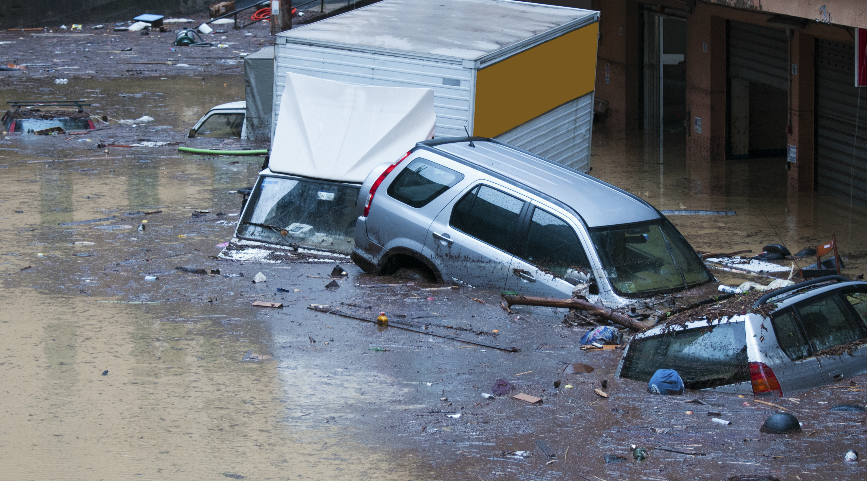
Southern Ontario gets hit with serious flooding more often than most people expect. Whether it’s a flash flood, a burst water main, or a storm that turned your street into a river overnight, a flood-damaged car is one of the most stressful situations a vehicle owner can face. The damage isn’t always visible. The decisions aren’t always obvious. And the clock is ticking from the moment the water recedes.
What to Do if the Car is Damaged by Flooding
This guide walks you through exactly what to do step by step if your car has been damaged by flooding.
Step 1: Don’t Try to Start It
This is the single most important rule. If your car was submerged or partially flooded, do not turn the key or press the start button, not even to check if it works.
Water in the engine causes what mechanics call a hydrostatic lock. Unlike air, water doesn’t compress. If water has entered the cylinders and you try to crank the engine, the connecting rods bend or snap instantly. A fixable flood-damaged car becomes an unfixable one in a single turn of the key. Even if the water only reached the floorboards, electrical systems throughout the vehicle may be compromised, and attempting to start it can cause short circuits that spread damage further. Leave it. Call a tow truck. Let a professional assess it first.
Step 2: Document Everything Before Touching Anything
Before you drain water, pull out soaked floor mats, or do anything else, take photographs and video of the entire vehicle inside and out. Document the waterline on the exterior, the condition of the interior, the engine bay, and the trunk.
This documentation is essential for your insurance claim. Insurers need evidence of the condition of the vehicle at the time of the loss, not after you’ve started cleaning it up. The more thorough your documentation, the stronger your claim.
Step 3: Contact Your Insurance Company
Call your insurer as soon as possible. Flood damage to a vehicle is typically covered under comprehensive insurance in Ontario not collision coverage. If you only carry liability insurance, flood damage is not covered, and you’ll be dealing with the car entirely on your own.
When you call, your insurer will:
- Open a claim and assign an adjuster
- Arrange for the vehicle to be inspected
- Determine whether the car is repairable or a write-off
In Ontario, a vehicle is declared a total loss when the estimated repair cost exceeds a certain percentage of the car’s actual cash value typically around 70 to 80 percent depending on the insurer. Given how extensively flood damage can affect mechanical, electrical, and structural systems simultaneously, many flood-damaged vehicles are written off entirely.
Also read: How To Scrap Unregistered Vehicles
Step 4: Understand What Flood Does to a Car
Engine and mechanical systems
If water entered the engine, transmission, or differential, internal components may be corroded or contaminated. Even a small amount of water mixed into engine oil or transmission fluid causes severe long-term damage.
Electrical systems
Modern cars are packed with wiring, sensors, control modules, and computers. Water destroys all of it and not always immediately. Corrosion in electrical connectors can cause intermittent failures that are nearly impossible to diagnose months down the road. This is why flood-damaged cars have a reputation for being financial sinkholes even after they appear repaired.
Interior and mold
Carpet, seat foam, and headliners absorb water like a sponge. If the interior isn’t dried out completely and quickly, mold sets in within 24 to 48 hours. Mold in a car is expensive to remediate properly and nearly impossible to fully eliminate once it takes hold.
Brakes and suspension
Calipers, rotors, and brake lines exposed to floodwater which often contains mud, sediment, and contaminants corrode faster than normal. Wheel bearings and suspension bushings are similarly affected.
Safety systems
Airbag sensors and seatbelt pretensioners exposed to water may deploy unexpectedly or fail to deploy when needed. These systems cannot be trusted after a flood without thorough professional inspection and likely replacement.
Step 5: Get an Independent Inspection
Whether or not you’re going through insurance, get an independent mechanic to inspect the vehicle before making any decisions. Do not rely solely on the insurer’s assessment if you believe the car is repairable. Do not rely on a seller’s word if you’re considering buying a used car that may have flood history.
An independent inspection will tell you the true extent of the damage and give you a realistic repair estimate. In many cases, owners are surprised to discover the repair cost far exceeds what they expected -even on cars that looked relatively unaffected.
Your Options for a Flood-Damaged Car
Once you’ve gone through insurance and had the car inspected, you have a few options.
1. Accept the insurance write-off settlement
If your insurer declares it a total loss, they’ll offer you the actual cash value of the vehicle before the flood damage occurred. This is often the cleanest outcome you get paid, the insurer takes the car, and you move on.
2. Keep the car and repair it
You can choose to keep a written-off vehicle in Ontario, but it will carry a salvage title and must pass a structural inspection before it can be registered again. Only consider this if you have access to very affordable mechanical labor and the repair estimate is genuinely reasonable relative to the car’s value.
3. Sell it as-is to a scrap car buyer
If the car is not worth repairing and you want to move on quickly, selling it for scrap is the most practical option. A flood-damaged car still has scrap value the steel, aluminum, copper wiring, and catalytic converter are all still worth money regardless of whether the car runs or the interior is destroyed. You won’t get retail value, but you’ll get a fair cash payout and have the car removed from your property the same day.
You may like to know: Top 10 metals in car with high scrap value
Should You Repair a Flood-Damaged Car?
This depends on three things: the depth of flooding, how quickly the car was recovered and dried out, and the repair estimate versus the car’s actual value.
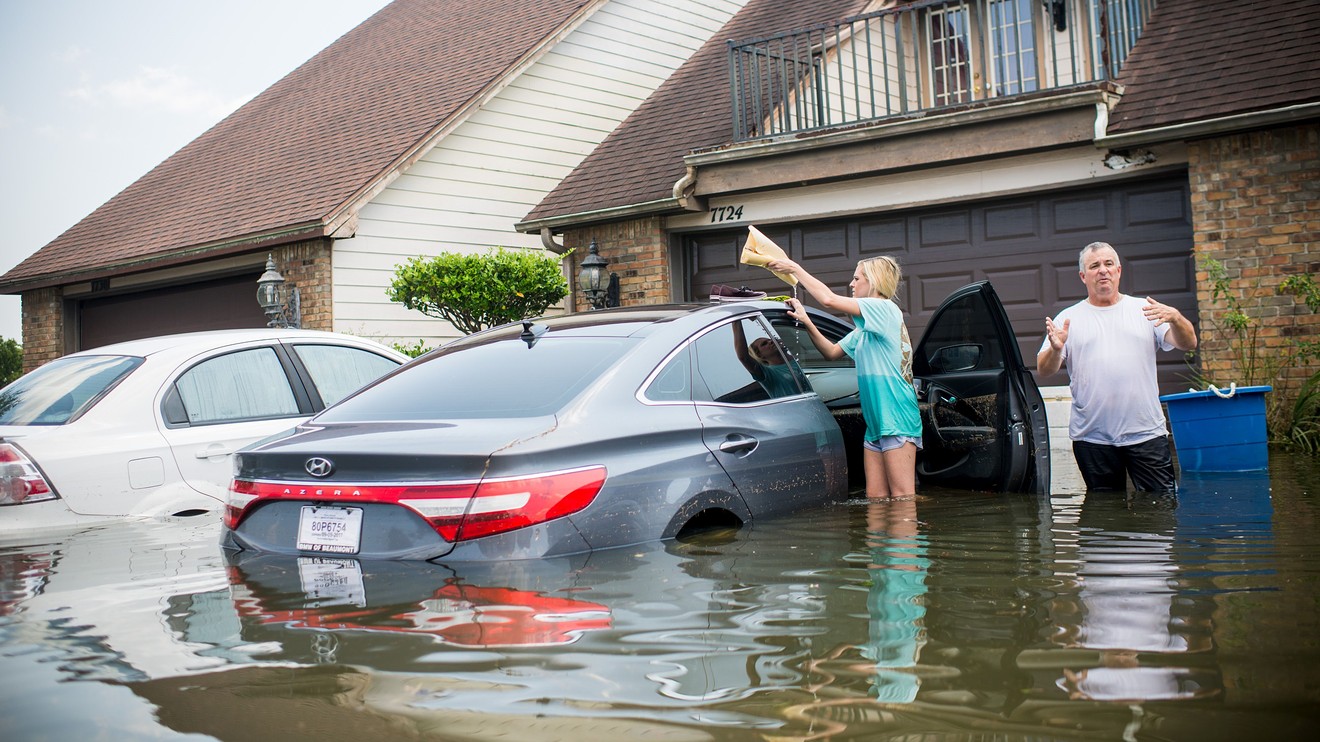
Minor flooding – water reached the floorboards but did not enter the engine bay or rise above the seats may be repairable without long-term consequences, provided the car was dried out quickly and electrical connections were inspected and treated.
Moderate to severe flooding – water reached the dashboard, entered the engine, or the car was fully submerged, almost always results in damage that costs more to repair than the car is worth. Electrical systems alone can cost thousands of dollars to fully restore, and there is no guarantee of reliability afterward.
The honest answer for most Ontario drivers dealing with significant flood damage is this: the math rarely works in favor of repair. A car that costs $8,000 to repair and is worth $6,000 on a good day is not worth saving especially when the repaired vehicle will carry a branded title and reduced resale value for the rest of its life.
What is a Branded Title and Why Does It Matter?
In Ontario, a vehicle that has been declared a total loss by an insurer receives a branded title specifically a “Irreparable” or “Salvage” designation on its registration. This is permanent. It follows the vehicle forever and is visible to any buyer who runs a vehicle history report.
A branded title dramatically reduces the resale value of a vehicle, makes it harder to insure, and signals to future buyers that the car has a troubled history. Even if you repair the car beautifully, the title brand stays. This is one of the strongest arguments against sinking money into a badly flood-damaged vehicle.
How Much Is a Flood-Damaged Car Worth as Scrap?
A flood-damaged car is worth less than an equivalent vehicle in regular condition, but it is still worth something. The scrap car value is based on weight and recoverable materials and flood damage doesn’t change either of those significantly.
For a typical passenger car in the Mississauga area, a flood-damaged vehicle will generally fetch between $150 and $500 depending on its size, weight, and whether key components like the catalytic converter are still intact. Trucks and SUVs will be at the higher end of that range due to their greater weight and metal content.
The condition of the interior, the state of the engine, and whether the car runs are largely irrelevant to the scrap calculation. The metal is still there. It still has value.
Read also: Scrap metal prices
Watch Out for Flood Car Scams
Ontario sees a surge in flood-damaged vehicles entering the used car market after major flooding events. Unscrupulous sellers dry out the car, clean it up cosmetically, and sell it privately without disclosing the history. Months later, the buyer is dealing with mysterious electrical failures, mold smell, and corrosion they can’t trace.
Before buying any used car particularly after a major weather event run a vehicle history report through CARFAX Canada or a similar service. Check for title brands, insurance write-off records, and any gaps in ownership history. A flood-damaged car sold without disclosure is not just a bad deal it may be unsafe.
The Bottom Line
A flood-damaged car forces you to make fast decisions under stress. The key steps are simple: don’t start the engine, document everything, contact your insurer, and get an independent inspection before committing to anything.
If the repair path doesn’t make financial sense and for most significant flood damage, it won’t, scrapping the vehicle is a clean, fast, and legitimate exit. You get cash in hand, the car is removed for free, and you’re not sinking more money into a vehicle that will cost you in unpredictable ways for years to come.
Dealing with a flood-damaged car in Mississauga, Brampton, Oakville, or Etobicoke? Call Scrap Car Buyer Mississauga at (647) 547-0393 for a free, no-obligation quote. Free towing, same-day pickup, cash on the spot.
If you have a scrap car lying in your house, get it scrapped in GTA areas- Mississauga, Brampton, Oakville, Etobicoke at the best prices.