
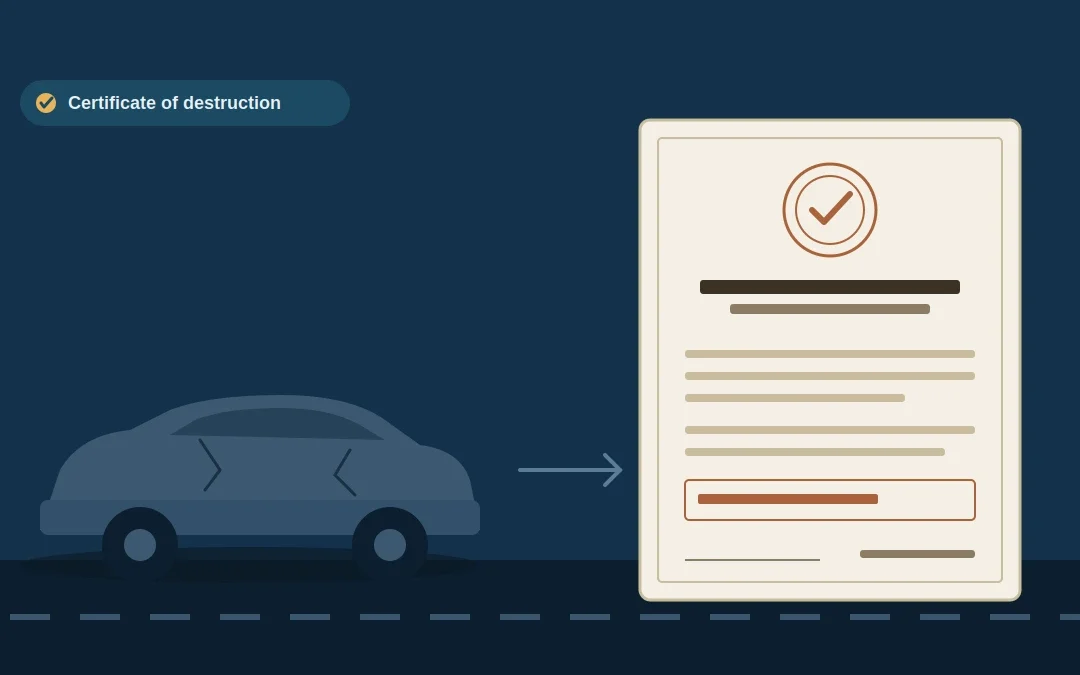
When a vehicle reaches the end of its life, there’s more to retiring it than simply handing over the keys. One document plays a critical role in closing the chapter on your vehicle legally and safely: the Certificate of Destruction (CoD). If you’ve never heard of it before, you’re not alone many vehicle owners only learn about this document when it’s time to part ways with an old, damaged, or unroadworthy car.
In this guide, we’ll break down exactly what a Certificate of Destruction is, why it matters, who issues it, and what could go wrong if you don’t get one.
What is a Certificate of Destruction (CoD)?
A Certificate of Destruction is an official document issued when a vehicle has been permanently taken out of circulation and dismantled or destroyed at an authorized facility. It is as legal proof that a specific vehicle identified by its Vehicle Identification Number (VIN) – no longer exists as a functioning, drivable automobile and has been processed for recycling or disposal.
This certificate is issued by a licensed vehicle recycler, or licensed scrap yard, or auto recycling facility that meets specific provincial or municipal environmental and safety standards. When you take your end-of-life vehicle to a scrap car facility, this document is one of the key pieces of paperwork you should expect to receive once the destruction process is complete.
Why Does a Certificate of Destruction Matter?
You might be wondering if the car is gone, why does the paperwork matter? Here’s why this small document carries significant weight.
1. Legal Proof of Ownership Transfer and Disposal
Without a Certificate of Destruction, there’s no official record that your vehicle has been retired. This means the vehicle could technically still be listed as registered to you in government records even though it no longer physically exists. This document closes that loop and protects you from being held responsible for a vehicle that’s no longer on the road.
2. Future Liability Risk Reduce
If your old vehicle isn’t properly deregistered and something happens involving that VIN whether it’s fraudulent resale, unpaid tolls, parking tickets, or even involvement in a crime you could be held liable if your name is still attached to the vehicle in official records.
3. Insurance and Registration Cancellation
Insurance companies and licensing bureaus require a proof when the vehicle is destroyed before they’ll fully cancel your policy or registration. A Certificate of Destruction is a document there’s no lingering paperwork trail that could come back to cause confusion or unexpected fees.
4. Environmental Compliance
Authorized recycling facilities that issue Certificates of Destruction follow environmental regulations for disposing of fluids, batteries, tires, and other hazardous materials. If you get your certificate from a licensed facility your vehicle will be recycled responsibly, not dumped illegally or left to leak contaminants into the environment.
5. Preventing Vehicle Fraud
Some unscrupulous individuals attempt to resurrect “destroyed” vehicles and reselling parts or even rebuilding cars using stolen VINs. A properly issued Certificate of Destruction prevent this type of fraud and creating an official, traceable record that the vehicle in question is permanently out of commission.
Read Also: What Paperwork Is Needed to Scrap a Car? A Complete Guide
How to Get a Certificate of Destruction?
This is step by step process to obtain you vehicle COD:
- Choose a licensed and authorized vehicle recycler – Not every buyer or scrap yard is authorized to issue this document, so it’s important to work with a reputable facility.
- Provide vehicle details – Share the VIN, ownership documents, and identification.
- Vehicle inspection and processing – The facility inspects the vehicle, removes hazardous fluids and reusable parts, and then dismantles or crushes the vehicle.
- Certificate issuance – Once destruction is complete, the facility issues the Certificate of Destruction with details such as the VIN, date of destruction, and facility information.
- Submit to relevant authorities -. Depending on your province, you may need to submit this certificate to cancel your registration and insurance formally.
Information included in a Certificate of Destruction (CoD)
A standard Certificate of Destruction generally includes the following information-
- Vehicle Identification Number (VIN)
- Make, model, and year of the vehicle
- Name and address of the vehicle owner
- Date the vehicle was destroyed
- Name, address, and license number of the recycling facility
- Signature or official stamp confirming destruction
Keep this document in a safe place, along with copies of your registration cancellation and any related insurance paperwork.
Read also: Why Your Car Makes Different Noises and What They Mean
What Happens if You don’t Get One?
If you want to get rid of an old vehicle. However, without a Certificate of Destruction:
- Your name may remain attached to the vehicle in government records indefinitely
- You could be liable for tickets, tolls, or legal issues linked to the VIN
- Insurance companies may continue billing you or refuse to fully cancel your policy
- You lose your legal proof if any dispute arises about the vehicle’s fate
Read also: Where to Recycle Used Car Batteries in Canada
When Do You Need a Certificate of Destruction?
A CoD is required in need of situations such as:
- Scrapping an old or damaged vehicle that’s no longer roadworthy or cost-effective to repair
- Selling a vehicle for parts through a licensed scrap car buyer
- Settling an insurance claim on a total-loss vehicle
- Deregistering a vehicle with your provincial transportation authority
- Closing out a fleet vehicle that has reached the end of its operational life
Final Thoughts
A Certificate of Destruction is a crucial safeguard that protects vehicle owners from liability, fraud, and unnecessary bureaucratic complications. It is essential required document for retiring an old car, settling an insurance claim, or responsibly dispose of a vehicle that’s no longer roadworthy.