
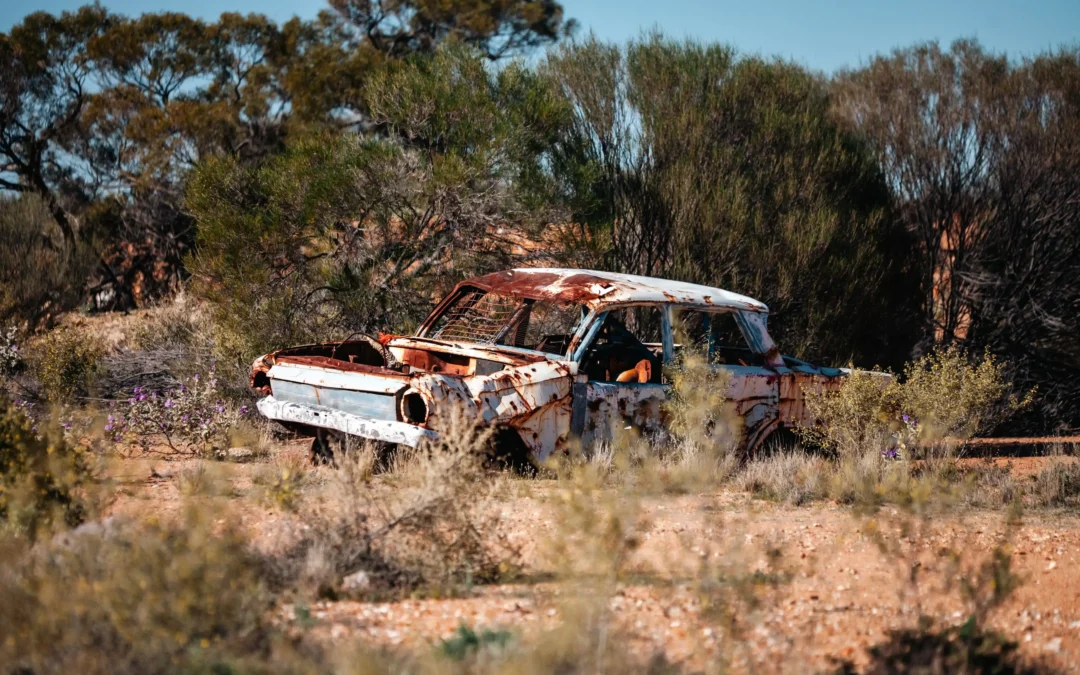
A vehicle parked for years can gradually become part of the background of everyday life. Perhaps it stopped starting one winter, or an expensive repair convinced its owner to leave it sitting until there was enough money to fix it. Sometimes, life simply became busy, and the vehicle slipped further down the priority list.
At first, getting it running again seems like a manageable project. But as months turn into years, owners often begin asking a different question: is repairing the vehicle still worthwhile, or is selling it the more practical decision?
For owners in Brampton and across the Greater Toronto Area, understanding the available options can make that decision easier. Exploring a local scrap car removal service in Brampton can also help owners understand what they can do with a vehicle that has been sitting unused for an extended period.
Why a Vehicle Parked for Years Can Become Expensive to Repair
A vehicle does not remain in the same condition simply because it is not being driven.
When a car hasn’t started in years, several components may deteriorate while it sits unused. The exact problems depend on where it has been parked, its previous condition and how well it was maintained before being taken off the road.
Some common issues include:
- Battery failure: A battery left unused for a long period may lose its ability to hold a charge.
- Fuel-system problems: Old gasoline can deteriorate and contribute to deposits or blockages.
- Tyre deterioration: Tyres may lose pressure and develop age-related damage or flat spots.
- Brake corrosion: Moisture and inactivity can cause brake components to corrode or seize.
- Rust: Road salt, moisture and exposure to the elements can affect the body and undercarriage.
- Fluid-related problems: Leaks, contamination and ageing fluids may create additional mechanical concerns.
A vehicle that was running properly when it was parked may therefore need more than a new battery to return to the road.
This is why it is important not to assume that a car can be made roadworthy with one inexpensive repair.
Why a Vehicle Parked for Years Can Become More Expensive to Repair Over Time
One of the most common assumptions about an unused vehicle is that it only needs a little attention to get moving again.
Sometimes that is true. But when a car hasn’t started in years, the original mechanical problem may have become only one part of a larger repair list.
Consider a car that was parked because of an engine problem. The owner intended to fix it after saving some money. Over time, the battery stopped working, the tyres lost pressure and corrosion developed around exposed components.
When the owner finally contacts a mechanic, the inspection may reveal several issues that were not present when the car was first parked.
There may be concerns involving:
- The engine or fuel system.
- Electrical connections and wiring.
- Brakes and suspension.
- Tyres and wheels.
- Cooling-system components.
- Rust or damage underneath the vehicle.
Each repair adds to the overall cost. More importantly, fixing one problem does not guarantee that another will not appear once the vehicle is running again.
Before spending money, it makes sense to understand the likely repair costs and compare them with the vehicle’s potential resale value.
Can You Sell a Vehicle Parked for Years?
Yes. A vehicle does not have to start or drive under its own power to have potential selling value.
The amount someone may offer depends on the vehicle’s actual condition, its components and what can reasonably be recovered from it.
For example, a car with a failed engine may still have usable doors, wheels, electronic components or other parts. Another vehicle of the same age may have extensive rust, accident damage or several missing components.
The difference is not always obvious from the outside.
There are generally a few options worth considering:
Selling privately: Someone with mechanical knowledge may be interested in buying the vehicle as a repair project. However, finding the right buyer can take time, particularly when the car cannot be driven.
Selling for parts: Certain components may have resale value if they are in suitable condition and there is demand for them. This option can involve removing, storing and selling individual parts.
Selling to a scrap car buyer: If repairing or privately selling the vehicle is no longer practical, a scrap car removal service may assess it for reusable components and recyclable materials.
The best option depends on how much effort you are willing to put into the process and what the vehicle is realistically worth.
How to Arrange Removal for a Vehicle Parked for Years in Brampton
The fact that a vehicle has not started for years is important, but it is not the only detail a buyer considers.
1. Make, Model and Year
The vehicle’s make, model and year help establish its specifications and the components it may contain.
Some older vehicles have parts that remain in demand. Others may have limited recovery potential because of their age, condition or the availability of replacement components.
2. Mechanical Condition
A vehicle with one major mechanical problem may still have several usable components.
A car with engine trouble but an otherwise complete interior, intact body panels and undamaged components may be assessed differently from one with several mechanical failures.
3. Missing Parts
If the battery, catalytic converter, engine, transmission or other major components have been removed, this can affect the assessment.
It is better to mention missing parts when requesting an offer rather than waiting until collection.
4. Rust and Exterior Damage
A car that has been parked outside for years may have developed corrosion around the wheel arches, doors, floor panels or undercarriage.
The extent of the damage matters. Surface rust and serious structural deterioration are not the same thing.
5. Collection Requirements
A vehicle that has not moved for years may have flat tyres, seized brakes or restricted access.
A car sitting in an open driveway can present different collection requirements from one trapped inside a narrow garage or behind other vehicles.
These details help explain why buyers need more than the vehicle’s make and model before giving a realistic assessment.
Should You Try to Start the Vehicle Parked for Years Before Selling It?
It is understandable to want to hear the engine running before deciding what to do with an old vehicle.
However, attempting to restart a car that has been sitting unused for years without checking its condition first may create additional problems.
Old fuel, deteriorated fluids, damaged belts, corrosion and other mechanical issues can make restarting an unknown vehicle unwise.
If you are considering repairing it, arrange an appropriate mechanical inspection first. A qualified mechanic can help determine whether the vehicle can be restarted safely and what work may be required.
If you are already considering selling it for scrap, you do not necessarily need to spend money trying to make it run.
Be honest with the buyer about the fact that the vehicle is non-running. Explain when it last operated, what problem caused it to be parked and whether you know of any additional damage.
An accurate description is more useful than an uncertain promise that the car might start with a boost.
What Are Your Options If You Do Not Want to Repair It?
Not every vehicle deserves another repair bill.
There comes a point when the cost, time and uncertainty involved in bringing an old car back to life outweigh the practical benefit of keeping it.
If a car hasn’t started in years and you have no realistic plan to repair it, consider the following options.
Keep it as a repair project: This makes sense if you genuinely intend to restore the vehicle and have the space, budget and time to do so.
Sell it to a private buyer: This may work if the vehicle has repair potential and you are prepared to answer questions, arrange inspections and negotiate with interested buyers.
Sell individual parts: This can be an option when certain components are in good condition, although dismantling and selling parts takes effort and may leave you responsible for disposing of the remaining shell.
Arrange scrap car removal: If the vehicle is no longer worth repairing or dismantling yourself, a scrap car buyer may be able to assess it and discuss collection.
A professional scrap car removal company can help you explore an option without having to make the vehicle roadworthy first.
It is worth comparing the likely return with the time and expense involved in each option. The highest possible offer is not always the most practical outcome if it requires weeks of work.
What Paperwork Should You Prepare Before Selling an Old Car in Ontario?
An old vehicle may have been sitting unused for so long that its paperwork is difficult to locate. Before arranging a sale, check whether you still have the vehicle permit and whether the ownership details match the vehicle.
You should also confirm the vehicle identification number (VIN), which can be compared with the information on the permit.
For a typical private sale of a used vehicle in Ontario, sellers have specific documentation responsibilities. These generally include providing a Used Vehicle Information Package (UVIP), a signed bill of sale and the completed vehicle transfer section of the permit.
The Ontario government’s guide to buying or selling a used vehicle explains these responsibilities and the documents involved in a typical private sale.
If you are selling to a scrap or salvage buyer, ask what documents are required for that particular transaction rather than assuming the private-sale process applies in exactly the same way.
Before collection:
- Locate the vehicle permit.
- Confirm the VIN and ownership information.
- Ask the buyer what paperwork is required.
- Remove your personal belongings.
- Remove your licence plates and follow the applicable Ontario licence plate and vehicle registration instructions.
- Keep a record of the transaction.
Having the relevant paperwork ready can make the process easier and help avoid unnecessary delays.
How to Arrange Removal When a Car Hasn’t Started in Years in Brampton
For many Brampton residents, an unused vehicle eventually becomes a space problem.
A car sitting in the driveway can prevent another vehicle from parking there. One stored in a garage can make it difficult to use the space for tools, storage or everyday activities.
The challenge is that a vehicle that has been parked for years may not be easy to move.
When contacting a scrap car buyer, explain the situation clearly. You do not need to know every mechanical detail, but a few basic facts can help the buyer understand the vehicle and its collection requirements.
Provide:
- The make, model and year.
- Approximate mileage, if known.
- How long the vehicle has been sitting.
- Whether the engine turns over or the car is completely non-running.
- Any known mechanical problems or visible damage.
- Whether the vehicle has flat tyres or missing components.
- Its location and accessibility.
If the vehicle is in a garage, has limited access or cannot roll, mention that before arranging collection.
Brampton residents looking into local options can visit the Scrap Car Removal Brampton service page to learn more about the service.
The important thing is to make the vehicle’s condition clear from the beginning. That helps avoid surprises when collection is being arranged.
When Is It Finally Time to Let an Unused Car Go?
Sometimes the hardest part of selling an old car has very little to do with its mechanical condition.
It may be a vehicle that was used for years to commute to work, take children to school or manage everyday responsibilities. It may have been parked after an unexpected repair bill, with the intention of fixing it when circumstances improved.
That intention can remain for a surprisingly long time.
But keeping a vehicle because you might repair it someday is different from having a realistic plan to do so.
Ask yourself:
- Have I obtained a repair estimate?
- Do I still intend to use this vehicle?
- Is the cost of bringing it back to life reasonable?
- Am I keeping it because it has a purpose, or simply because I have not made a decision?
If the answers point towards selling, there is no reason to keep postponing the process.
A vehicle that has been sitting unused for years may still have something worth recovering. Even if it is no longer suitable for the road, its components and recyclable materials may have value.
Frequently Asked Questions
Can I sell a vehicle parked for years that hasn’t started in years?
Yes. Non-running vehicles can be sold to private buyers, parts buyers or scrap car buyers. The available options and potential offer depend on the vehicle’s condition and the buyer’s requirements.
Does a vehicle parked for years need a working battery to be sold for scrap?
No. A working battery is not necessarily required. Tell the buyer if the battery is missing or no longer functional so the vehicle can be assessed accurately.
Can I sell a car that has been sitting outside for several years?
Yes, although prolonged outdoor exposure may lead to rust, corrosion, water damage and deterioration. These conditions can influence the vehicle’s assessment.
Should I repair an old car before selling it?
Not automatically. Compare the likely repair costs with the vehicle’s potential selling value. If the required work is extensive, selling it in its current condition may be more practical.
Can a vehicle parked for years be collected from a driveway in Brampton?
Collection may be possible depending on the vehicle, its accessibility and the buyer’s equipment and service area. Explain whether the car can roll, steer or be moved before arranging pickup.
Final Thoughts
An old car can remain parked for years without anyone making a firm decision about it. There is always another reason to wait: the cost of repairs, a busy schedule or the hope that it might be useful again someday.
But eventually, it is worth looking at the vehicle as it is today rather than the vehicle you remember driving.
If a car hasn’t started in years, it may still have options beyond sitting unused. You can explore repairs, a private sale, parts recovery or scrap removal.
The right decision is the one that makes practical and financial sense for your circumstances. Sometimes, moving on from an old vehicle is not giving up on it. It is simply recognising that its useful life has taken a different direction.
If you are considering getting an unused vehicle removed, visit our Scrap Car Removal Brampton page to explore your options.