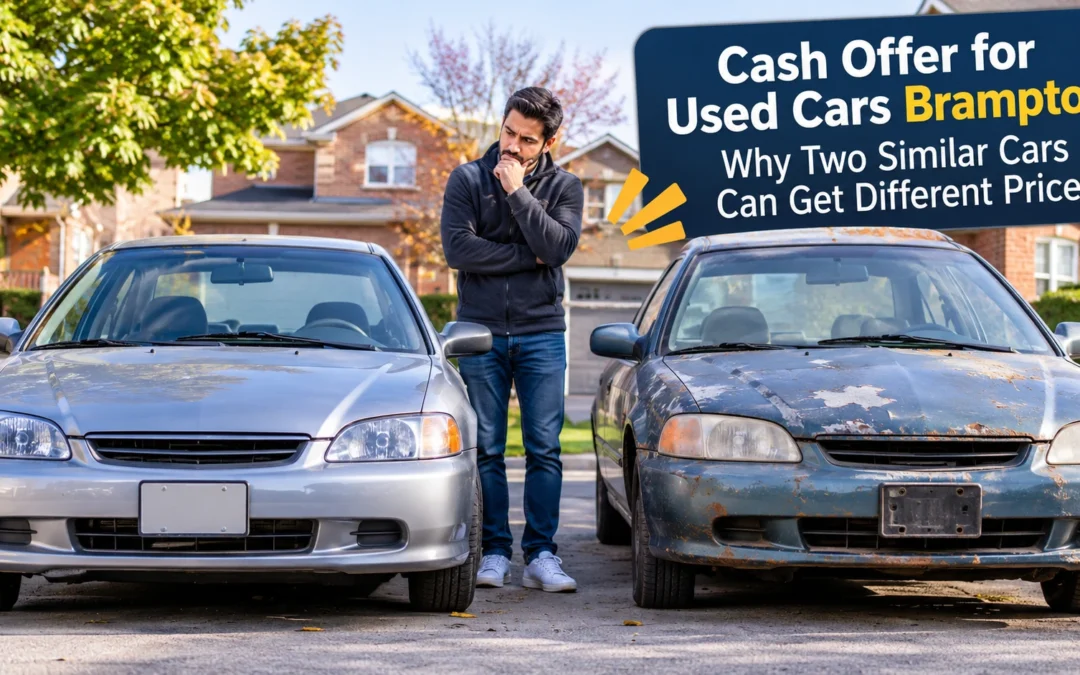
Getting a cash offer for used cars in Brampton can be surprisingly different from one vehicle to another, even when two cars look almost identical. They might be the same make, model and year, with similar mileage and body styles. Yet one owner receives a noticeably better offer than the other. Why?
The answer is that a car’s value is not determined by its appearance alone. What happens underneath the hood, how well it has been maintained, which components are still usable and even whether important parts are missing can influence what a buyer is willing to pay.
This often comes as a surprise to owners. After all, if two cars look alike, it seems reasonable to expect them to be worth roughly the same amount. But buyers look beyond the surface. They consider what can be reused, repaired, resold or recycled.
Understanding these differences can help you set realistic expectations before selling your old vehicle in Brampton.
What Determines a Cash Offer for Used Cars in Brampton?
A vehicle’s value is usually the result of several factors working together. No single detail tells the complete story.
For example, two ten-year-old sedans may have similar exterior dimensions and engine sizes. One might have a working engine, a usable transmission and a complete interior. The other could have serious mechanical problems, extensive rust or several missing components.
Although they look similar from the outside, their potential value to a buyer can be quite different.
Some of the main considerations include:
- Make, model and year
- Overall mechanical and physical condition
- Mileage and maintenance history
- Vehicle weight and recyclable metal
- Usable components and replacement parts
- Missing or damaged components
- Current demand for particular parts and scrap materials
This is why a cash offer should be based on the actual vehicle rather than a general estimate based only on its age or model.
Why Mechanical Condition Changes a Car’s Value
Two cars can have similar paintwork and body shapes while being very different mechanically.
Consider two Brampton residents selling the same model of sedan. Both vehicles have scratches, faded paint and a few dents. At first glance, they appear to be in comparable condition.
However, the first car starts easily, runs smoothly and has a functioning transmission. The second has an engine problem and has been sitting unused for months.
For a buyer who intends to resell or recover usable components, that difference matters.
A working engine or transmission may have value beyond the vehicle’s scrap metal. Other components, including the alternator, starter, wheels and certain electronic parts, may also be reusable depending on their condition and demand.
On the other hand, a vehicle with severe mechanical damage may offer fewer opportunities for parts recovery.
This does not mean a car with a failed engine has no value. It simply means its value may be calculated differently.
If your vehicle no longer runs, you can still explore options through scrap car removal in Brampton.
How Mileage Affects a Cash Offer for a Used Car
Mileage is one of the first things many people mention when describing a vehicle. It is understandable. A car with 90,000 kilometres often sounds more attractive than one with 240,000 kilometres.
But mileage does not tell the entire story.
A high-mileage vehicle that has received regular maintenance may have several components in usable condition. Meanwhile, a lower-mileage vehicle that has been neglected, exposed to long periods of inactivity or involved in an accident may have significant problems.
For buyers assessing a vehicle, mileage is useful information, but it needs to be considered alongside its mechanical condition.
Think about how the vehicle was used. Was it driven regularly on highways? Was it used for frequent short trips? Did it spend long periods parked outside? Were maintenance issues addressed when they appeared?
These details help explain why two vehicles with similar mileage can receive different offers.
If you are requesting a cash offer for used cars in Brampton, provide an honest mileage estimate whenever possible. Accurate information helps the buyer understand what they are evaluating.
The Value of Reusable Parts: What Is Still Working?
A vehicle is made up of many individual components. Even when it is no longer suitable for everyday driving, some of those parts may still have practical value.
Depending on the vehicle and its condition, buyers may consider:
- Engine and transmission
- Catalytic converter
- Alternator and starter
- Aluminum wheels
- Battery
- Doors, mirrors and body panels
- Other reusable mechanical or electronic components
The important distinction is that a component’s presence does not automatically make it valuable. Its condition, compatibility, demand and ability to be recovered all matter.
For example, a vehicle with an intact catalytic converter may be assessed differently from an otherwise similar vehicle where that component has already been removed. Likewise, damaged or unusable parts may not contribute much to an offer.
This is one reason owners sometimes receive different cash offers for vehicles that appear nearly identical.
Why Missing Parts Can Reduce Your Offer
Imagine two cars of the same model arriving for assessment. One is complete, while the other has been stripped of its wheels, battery, catalytic converter and several interior components.
The second vehicle may still contain recyclable metal, but it offers fewer opportunities for recovering reusable parts.
Missing components can also affect how easily a vehicle can be collected or handled. A car without wheels, for example, may require additional arrangements during removal.
If you have already removed or sold parts from your vehicle, mention that when requesting an estimate. It is better to explain the situation upfront than to rely on an offer based on an assumption that the car is complete.
An accurate description gives the buyer a clearer picture and reduces the likelihood of misunderstandings when the vehicle is inspected.
How Rust, Accident Damage and Weather Exposure Matter
Brampton vehicles experience changing weather throughout the year. Rain, snow, road salt and temperature changes can all contribute to wear over time.
Some vehicles develop surface rust, while others experience more serious corrosion around body panels, wheel wells, the undercarriage or structural areas.
The difference is important.
A few cosmetic scratches may have little effect on a vehicle’s usefulness. Extensive rust or structural damage can make certain parts difficult or unsuitable to reuse.
Accident damage can also influence an offer. A damaged bumper may be relatively minor, while significant front-end damage could affect the engine bay, cooling system or other important components.
Flood damage creates another set of concerns because water can affect electrical systems, interior materials and mechanical components.
When asking for a cash offer for used cars in Brampton, describe visible damage honestly. You do not need to make a professional diagnosis. Simply explain what happened and what you know about the vehicle’s condition.
Why Vehicle Weight and Scrap Metal Prices Matter
Not every vehicle is purchased for the same reason. Some are assessed partly for their reusable components, while others may be valued primarily for their recyclable materials.
Vehicle weight can therefore play an important role in a scrap car assessment.
A larger vehicle may contain more recyclable metal than a smaller one. However, weight alone does not determine the final amount. The buyer must also consider processing costs, transportation, the vehicle’s condition and the current market value of recovered materials.
Scrap metal prices can change over time. That means an estimate made several months ago may not reflect the market when you are ready to sell.
For a closer look at the factors involved, read How Scrappers Calculate What Your Car Is Worth.
Understanding these factors helps explain why two similar vehicles may not receive the same offer, even if neither is in particularly good condition.
Does a Car’s Age Matter More Than Its Condition?
Age matters, but it is not the only consideration.
An older vehicle may still contain valuable reusable components. A newer vehicle may have extensive damage that limits what can be recovered.
For example, a fifteen-year-old car with a working engine, complete components and relatively little corrosion may be more appealing to a buyer than a newer vehicle that has suffered serious mechanical or accident damage.
This is especially relevant when comparing vehicles that are no longer being sold as ordinary used cars.
Once a vehicle reaches the point where repairs are no longer practical, its potential value may depend more on its parts and recyclable materials than its original purchase price.
That is why it is worth describing the vehicle’s actual condition instead of relying on its model year to estimate its value.
How to Get a More Accurate Cash Offer in Brampton
You do not need to know the technical value of every component before contacting a buyer. However, a little preparation can make the process easier.
Here are a few useful steps.
1. Share the correct vehicle details
Provide the make, model, year and approximate mileage. If you know the trim or engine size, include that information as well.
2. Explain whether the car runs
Be clear about whether it starts, drives and moves under its own power. Mention any known engine, transmission or electrical problems.
3. Describe visible damage
Point out significant rust, accident damage, flood exposure or missing components. You can also mention whether the vehicle has been sitting unused for a long time.
4. Provide recent photographs
Clear photographs of the exterior, interior, dashboard and any noticeable damage can help a buyer understand the vehicle before arranging an assessment.
5. Ask what the offer includes
Confirm whether towing or pickup is included and whether any additional charges could apply. Make sure you understand the payment arrangements before agreeing to the sale.
6. Compare offers carefully
A higher initial estimate is not necessarily the better option if important conditions or fees have not been explained. Compare what each buyer is actually offering and ask questions if something is unclear.
If you are selling a vehicle in Ontario, you can also review the Government of Ontario’s guide to buying or selling a used vehicle for information about the provincial process and required paperwork.
Getting a Fair Cash Offer for Your Used Car in Brampton
Selling an unwanted vehicle does not have to become a long project. The key is understanding what a buyer is evaluating and providing enough information to receive a realistic estimate.
At Scrap Car Buyer Mississauga, vehicle owners in Brampton can enquire about selling unwanted, damaged and non-running cars. The company’s Brampton service page explains its vehicle assessment and removal process.
Whether your car has mechanical problems, accident damage, rust or simply no longer fits your needs, describe its condition honestly and ask how the offer is calculated.
Remember, two cars can look almost identical and still have very different values. The difference often comes down to what is working, what can be reused, what needs to be recycled and what the current market supports.
A fair Cash Offer for Used Cars Brampton starts with a fair assessment of the vehicle in front of the buyer—not just the badge on its bonnet.